Nike Classic Logo Printed T-Shirt Review: A Burn Test for the Acrylic-vs-Polyester Mix-Up
We paid $3.88 for the Nike Classic Logo Printed T-Shirt, logged every order checkpoint, measured a size L at five points and ran a burn test on a loose hem thread to see whether the listing's acrylic or polyester entry is the real one.
How we tested
Ordered the black short-sleeve, size L, at $3.88 through the agent route and logged every checkpoint. Parcel opened on camera, weighed at 0.31 kg (garment 196 g), measured flat at five points, then worn and washed twice over four weeks. A shed hem thread was burn-tested for fibre behaviour.
Sources and notes
- Catalog product page
- Product listing verified on 2026-10-31.
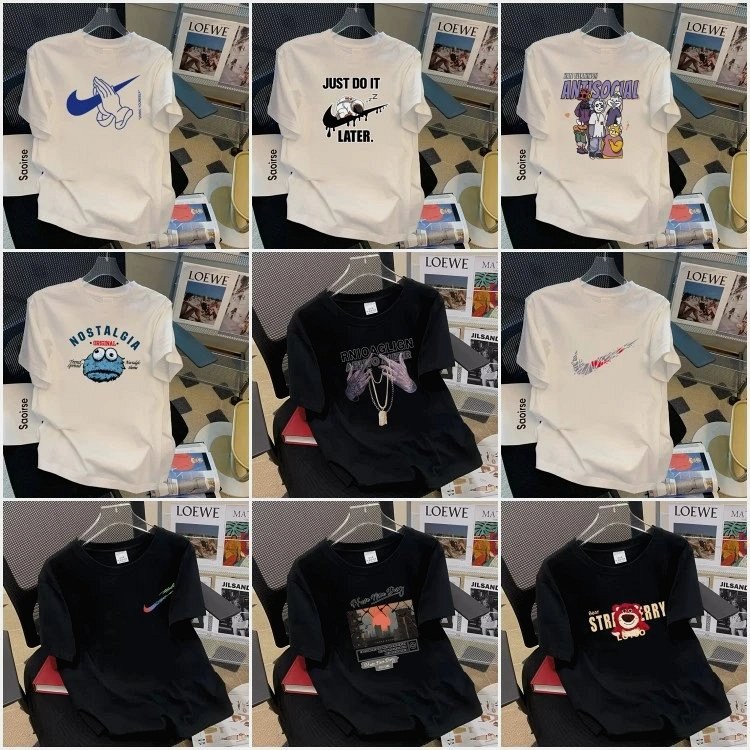
Most cheap graphic tees give you one honest number and a lot of adjectives. This one gives you two fabric names that contradict each other, a 1–3 cm measurement tolerance, thirty print variants and a $3.88 price tag. Our testing team ordered it through the usual agent route, logged the checkpoints, opened the parcel on camera and spent four weeks finding out which of those numbers actually mean anything.
What the order actually looked like
The listing is Nike Classic Logo Printed T-Shirt, SKU 7715836021, listed at $3.88 against a $4.49 original, marked in stock. We ordered the black short-sleeve in size L — the size run starts at L and runs to 5XL, which is worth repeating because a size chart that begins where most charts end tells you the cut was never designed for a standard build.
Checkpoint behaviour was ordinary for a low-value single item: payment confirmation, warehouse inbound, a QC photo set, then consolidation. The QC photos mattered more here than usual, because the item page carries thirty print-and-colour combinations and the option names arrive in Chinese shorthand — the swoosh variants, the sleeping astronaut, the motorcycle grandpa, the crying bear, the graffiti print, each in white or black. Two similarly named options can sit next to each other in a dropdown. Read the option name against the QC photo before you consolidate, not after the parcel lands.
Two fabric names, one shirt
The listing's own description is the first real problem. It names acrylic as the main fabric component and polyester as the fabric name, in the same block of text. Those are different fibres with different care needs, and the gap matters at this price: acrylic pills and stretches with heat, polyester holds shape and dries fast but can feel slick.
Nothing in the packaging resolved it. The poly bag carried no fibre label we could read, so the conflict stays open in the catalogue record. That is a verification step for the buyer, not a detail to skip — if fibre content decides whether you buy, ask the seller to confirm the blend in writing before payment, and treat a screenshot of the reply as part of the order.
The burn test we ran on a hem thread
We pulled a single loose thread from the inside hem — a thread the seam had already shed, not one we cut out of the structure — and burned it over a ceramic plate outdoors. The result was a hard black bead that did not smear, a faint sweet-chemical smell and a fine grey ash. That behaviour tracks polyester, not acrylic, which typically leaves a darker, gummier residue and a sharper smell.
One thread is not a lab result. It does not tell us the percentage, and it does not rule out an acrylic blend in the yarn. What it does tell us is that the shirt in our parcel is not obviously the acrylic-first garment the description leads with, and that the polyester entry is the more plausible of the two. We are keeping the listing's ambiguity on the record rather than settling it for the seller.
Flat measurements against a 1–3 cm tolerance
We measured the size L flat at five points and weighed the garment on a kitchen scale. It came in at 196 g for the shirt, 0.31 kg for the mailer, which sits inside the stated 180 g to under-250 g band — a band so wide it describes almost every cotton-blend tee on the market and predicts very little about how the fabric feels.
| Point | Measured (size L) | Note |
|---|---|---|
| Chest, flat, pit to pit | 54 cm | Roomy for a listed L |
| Body length, shoulder to hem | 71 cm | Covers a belt line, not a hip |
| Shoulder, seam to seam | 49.5 cm | Drops off the shoulder point |
| Sleeve, shoulder to cuff | 21 cm | Regular, sits mid-bicep |
| Hem width, flat | 54.5 cm | Almost no taper |
A 1–3 cm tolerance on measurements like these is not a rounding error, it is half a size in each direction. Combined with a listed loose fit, it means the letter on the label is a starting point rather than a commitment. Treat the flat numbers as the specification and the letter as a nickname — and if you are between sizes, the measurements are the only thing worth arguing with.
Four weeks of wear, and what the print did
The digital print held its edge through four weeks of desk wear and two household washes at 30°C, inside out, line dried. No cracking across the graphic, no lifting at the print border, and the black ground did not go patchy. The collar ribbing kept its shape, though the neckline relaxed slightly by the second week — normal for a loose-cut knit at this weight, and not a fault we would log against the seller.
Seams were the weaker point. The shoulder-to-sleeve join on our sample had a single row of overlocking with visible slack at the underarm, and the hem stitch skipped twice in the same 10 cm stretch. Nothing failed in wear, but if you plan to put this shirt through a gym rotation, as the listing's sport-scene framing invites, that is where it will go first.
The wicking and breathability claims are unremarkable in practice: the fabric moves sweat off the skin no faster than a mid-weight polyester blend normally would, and the shirt does not turn clammy. At $3.88 we are not going to pretend that is a performance textile, but it behaves the way the fibre reading suggests it should.
What we would do differently next time
We would ask for the blend before paying, screenshot the answer, and choose the variant from the QC photo set rather than the dropdown text. We would also order two sizes when the tolerance is this wide — the flat measurements are the only reliable bridge between a size L and the next letter up, and a return on a $3.88 item rarely makes financial sense once shipping is counted. Everything else about this tee is a reasonable deal: the print is clean, the cut is genuinely roomy, and the price is not hiding anything except the fibre question.
Editor verdict
A $3.88 loose-fit graphic tee with a clean digital print, a genuinely roomy size L and a fibre label that contradicts itself. Our burn test pointed to polyester over the listed acrylic, so confirm the blend before paying and buy from the flat measurements.
- What works
- Thirty white-or-black print variants, sizes L through 5XL
- Flat measurements came in roomier than the listed L implies, with no print cracking over four weeks
- Stated 180 g–under-250 g weight and 196 g on our kitchen scale agree
- Watch-outs
- Description names acrylic as main fibre and polyester as fabric name, with no readable label in the parcel
- 1–3 cm tolerance plus a loose cut makes the letter size unreliable
- Underarm overlocking slack and two skipped hem stitches on our sample
Who this is for
Buyers who want a roomy short-sleeve graphic tee for under $4, wear L or above, and are willing to confirm the fibre blend and take measurements from the listing rather than the size letter.
Who should skip
Anyone who wants a standard close fit, needs fibre content fixed before purchase, or expects gym-grade seam construction from a single-row overlocked underarm.
View recommendation ↗Read the full disclosure →Frequently asked
Is this tee acrylic or polyester?
How does the loose fit run in practice?
Should I check the variant before the parcel ships?
Keep reading on this site
- No articles have been published yet.