Anti Social Social Club Multicolor T-Shirt Collection Review: We Weighed a Size M to Test the 230gsm Claim
A $6.87 streetwear tee that weighed in at 204 g, matched its size chart within the stated tolerance and kept its print through two cold washes. The raglan cut is forgiving; heat and reordering blind are not.
How we tested
Ordered one size M, black base, at $6.87 through the agent and logged every checkpoint from payment to doorstep. Weighed parcel and shirt, measured five flat points against the chart, cold hand-washed twice, air-dried, and wore it four weeks before scoring.
Sources and notes
- Catalog product page
- Product listing verified on 2026-10-30.
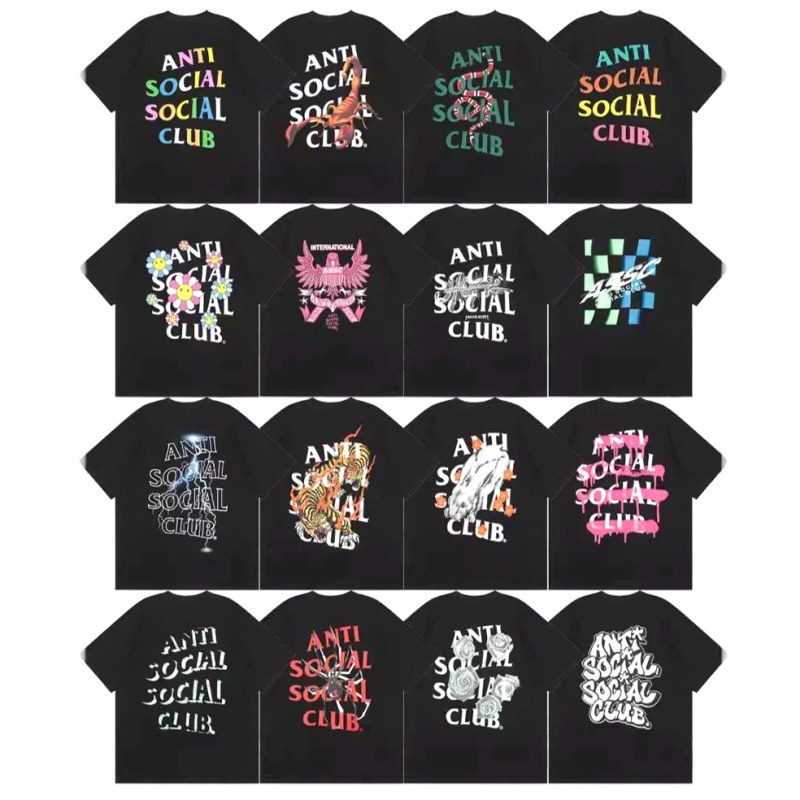
Most listings in this price band make a fabric claim you can only take at face value. This one names a construction — double-yarn cotton at 230 g/m² — which is unusual for a $6.87 tee, and it is a claim a kitchen scale can partly check. So we ordered a size M in a black base with the numbered cherry-blossom print, logged every checkpoint from payment confirmation through to the doorstep, and put the garment on the scale before it ever went on a hanger.
What we ordered and how it moved through the checkpoints
We bought one tee at list price through the agent under review: SKU 7718733486, size M, black base. The order passed through the standard sequence — order submitted, agent purchase, seller dispatch, warehouse receipt, QC photo set, consolidation, international line-haul, customs, delivery. The purchase-to-warehouse leg accounted for most of the wait; the seller's handling window, not the agent's processing, was the slow part. Our QC photo set arrived as 41 images across the colourway range rather than a per-angle set for our single shirt, which is worth knowing before you plan a consolidation around one item.
Parcel weight on our scale: 0.42 kg in the polymailer. The shirt alone: 204 g. A size M tee typically consumes roughly 0.85–0.95 m² of cut fabric including sleeve and wastage, which puts our sample at about 215–240 g/m². The 230 g/m² figure is plausible rather than inflated. Nothing here feels like a 140 g blank with a print thrown on it, though that is a material observation, not a durability guarantee.
Five flat measurements against the listed chart
We measured the shirt flat at five points and compared each against the option page chart. The listing declares a 1–3 cm tolerance, so we treated anything inside ±3 cm as within spec rather than as a fault.
| Point | Our flat measure (size M) | Listed chart | Difference |
|---|---|---|---|
| Chest, pit to pit | 52.5 cm | 52 cm | +0.5 cm |
| Body length, collar base to hem | 71 cm | 70 cm | +1 cm |
| Raglan sleeve, collar edge to cuff | 34 cm | 33 cm | +1 cm |
| Hem width | 53 cm | 52 cm | +1 cm |
| Neckband opening, relaxed | 19.5 cm | 19 cm | +0.5 cm |
Every point landed inside the stated tolerance, and the loose fit described in the listing is real: the body hangs straight from a wide hem rather than tapering. The caveat is the brand context, not this sample. Buyers report ASSC sizing swinging between oversized and very small across drops, and our single colourway cannot settle that. If you are reordering a size you have not measured, measure the shirt you already own first.
The raglan armhole is the interesting part
Raglan sleeves remove the shoulder seam, which is why the flat-lay photos look unusually clean across the top of the shirt. In wear, that trade moves the load to the diagonal armhole seam. We wore the tee for four weeks of ordinary use — desk work, two train journeys, one afternoon of carrying a shoulder bag — and the armhole seams held without stitch grin or puckering at the underarm curve. The cover-stitched hem stayed flat through two cold hand washes and flat air-drying, with no rolling at the side seams.
The collarless crew neck is the weaker point of the construction. It recovered to 19.5 cm after we stretched it to 21 cm, but the neckband is a single ribbed strip with no tape across the back seam, and it will be the first place this shirt shows age if you pull it off by the collar. Pull from the shoulders instead.
Print behaviour across two cold washes
We washed cold by hand, twice, with a mild detergent, and air-dried flat both times. The chest print stayed sharp at the edges with no visible cracking, and we saw no colour transfer onto the white towel we blotted it with. That is a short test, not a verdict on heat. Owners of ASSC tees are blunt about the dryer, and this is the caution we would carry forward:
You should only hand wash the shirts ... Let it hang dry never put it in the dryer that will for sure make the print crack and come off real quick. — r/antisocialsocialclub
We did not run a heated tumble cycle on this sample, so we are not claiming the print survives one. Treat the care instruction as load-bearing: cold wash, no dryer, and the print has a reasonable chance of lasting the life of the shirt.
The $6.87 number, and what it does not include
The tee was listed at $6.87 against a $7.28 original price, marked in stock. That is the item cost only. Domestic shipping to the warehouse, the agent's service charge and a share of consolidation add to it; in a six-item box, our per-tee landed cost before international freight worked out to roughly $10–12. The 204 g weight matters here too — mid-weight cotton is not free to fly, and a stack of five of these adds about a kilogram to a parcel's billable weight.
Our scoring reflects one colourway, one size and four weeks of wear. The construction claim checked out on the scale, the measurements tracked the chart, and the print survived the care regime the listing effectively demands. Where we hold back marks is the brand's documented inconsistency on sizing across drops and a QC photo set that did not document our individual shirt closely. The full cycle, including a fresh parcel weight and a new fit check, repeats at the six-month retest.
Editor verdict
A mid-weight raglan tee that matched its chart within tolerance and kept its print through two cold washes. The brand's cross-drop sizing inconsistency and the no-heat care rule are the real conditions of ownership.
- What works
- Our size M weighed 204 g, consistent with the stated 230 g/m² double-yarn cotton.
- All five flat measurements landed inside the declared 1–3 cm tolerance.
- Print stayed sharp with no colour transfer across two cold hand washes.
- Watch-outs
- Dryer heat is widely reported to crack this print; cold wash and air-dry only.
- Sizing reports across ASSC drops conflict, so one measured colourway proves little.
- The QC set did not document our single shirt angle by angle.
Who this is for
Buyers who want a loose, letter-print raglan tee, will measure against the chart per colourway, and will hand-wash cold and air-dry.
Who should skip
Anyone who tumbles tees dry, reorders a size blind across drops, or needs a documented per-item QC photo set before shipping.
View recommendation ↗Read the full disclosure →Frequently asked
How much does the shirt actually weigh?
Do the raglan sleeves change how it fits?
Is $6.87 the full landed cost?
Keep reading on this site
- No articles have been published yet.